
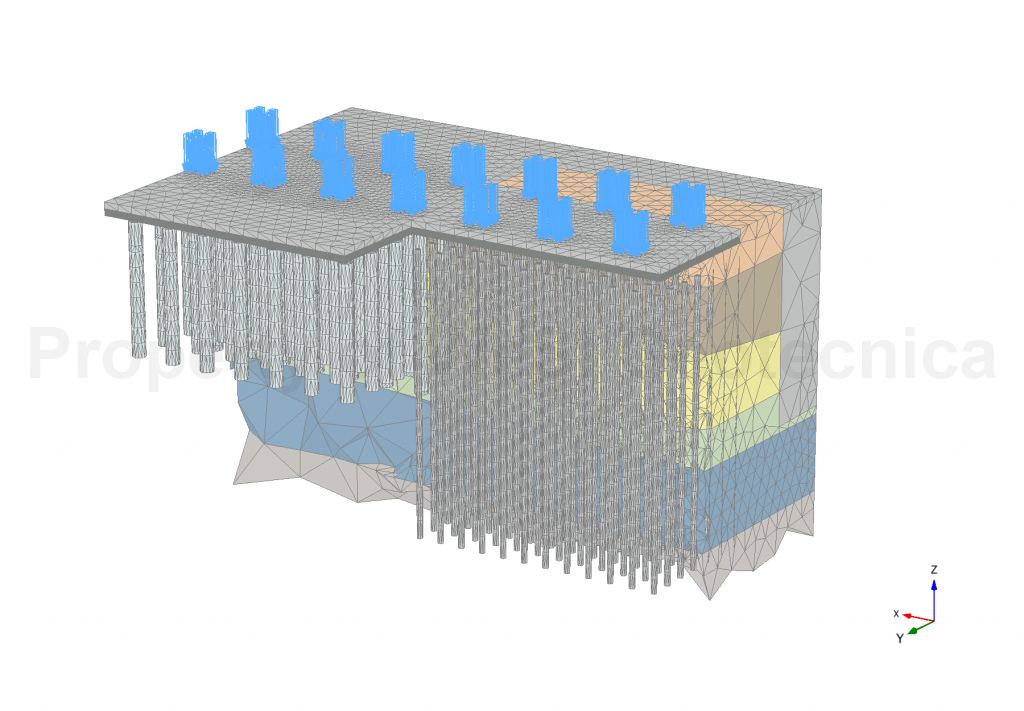
Logistics warehouses often cover tens of thousands of square metres. Columns in precast concrete, steel or mixed structural frames transfer concentrated loads to the foundations. Floor slabs, racking and materials handling equipment add distributed loads. The design must ensure safety and meet the serviceability tolerances of the building and its equipment.
Settlement and ground variability
Made ground, irregular alluvial deposits and compressible layers of varying thickness can occur within a single building footprint. Even under similar loads, different columns may settle by different amounts. The design must account for total settlement, differential settlement and angular distortion. High-density racking and automated handling systems can impose even tighter limits on floor deformation.
Finite element analysis
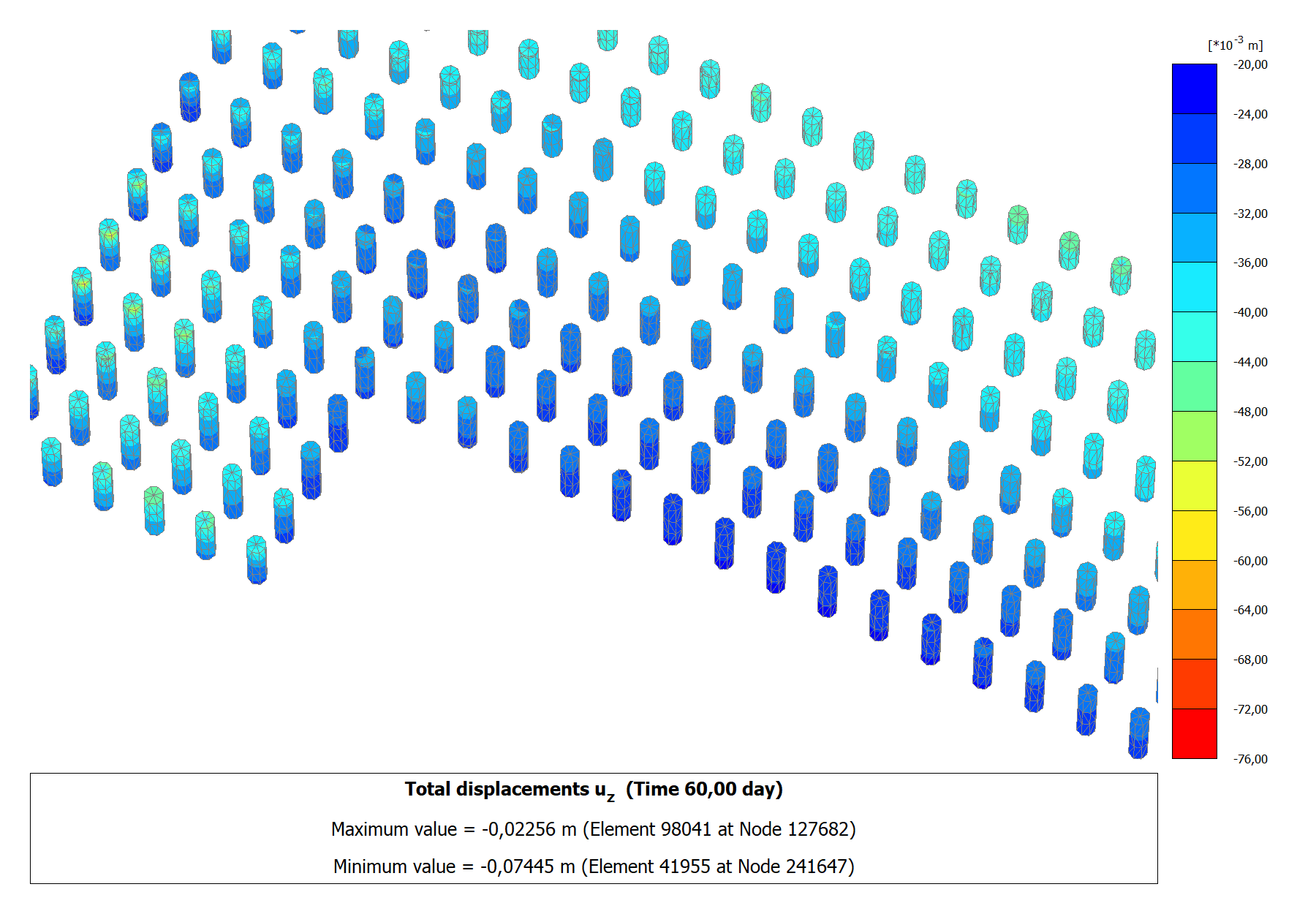
One-dimensional calculations and checks on individual foundations are useful at the preliminary design stage. Two- and three-dimensional finite element models then allow engineers to represent the geometry of the soil layers, stress redistribution and interaction between adjacent foundations. The constitutive model accounts for the non-linear response of the soil and the dependence of stiffness on stress and strain. In compressible fine-grained soils, the analysis can include consolidation and creep to estimate how settlement develops over time.
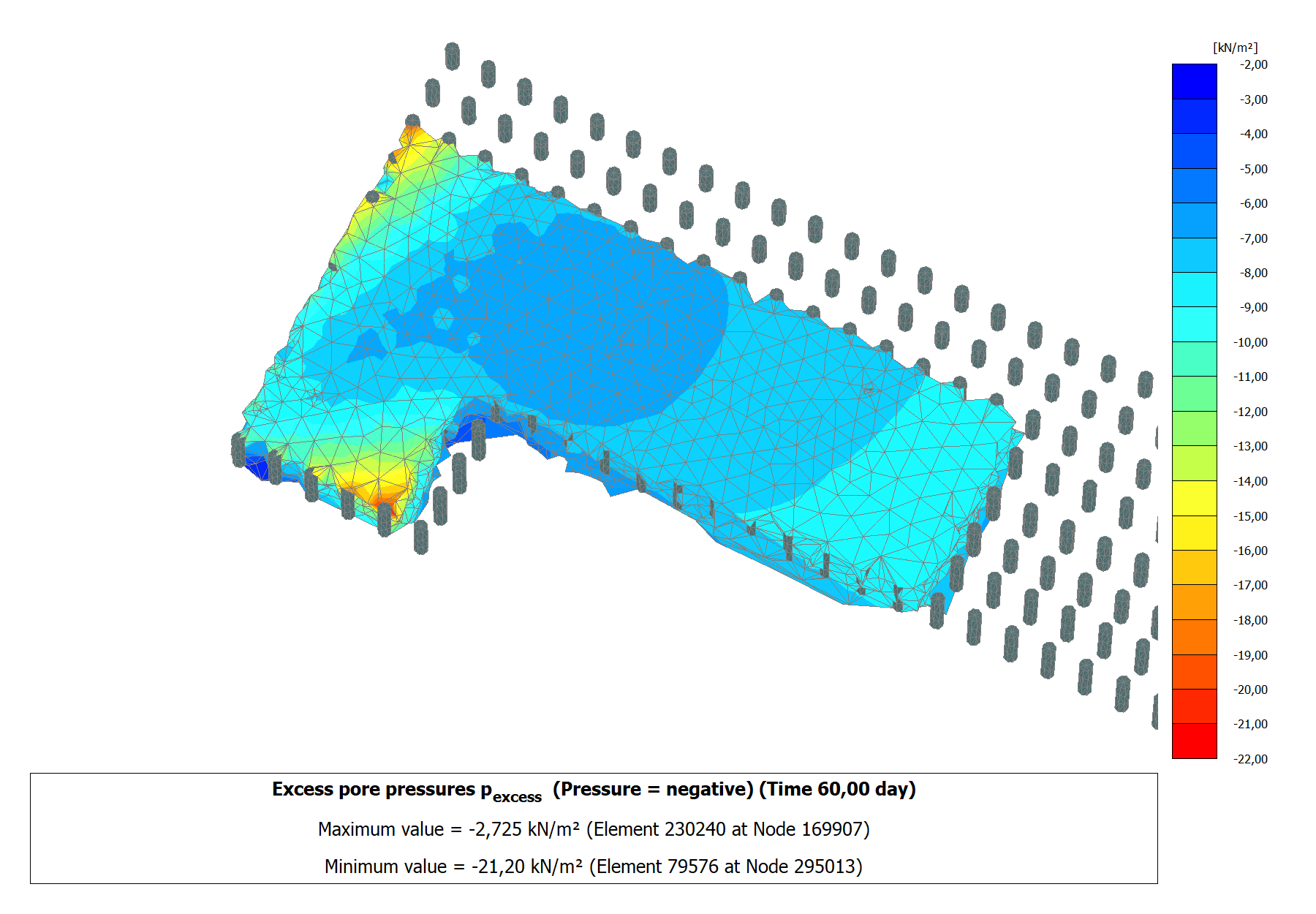
For shallow foundations on improved ground, the model shows how load is transferred between the natural soil and the reinforcing elements, and how deformation is distributed within the treated ground and the layers below it. For deep foundations, the analysis can account for the interaction between piles, soil and connecting structures, including group effects and load sharing between piles.
Foundation selection and optimisation
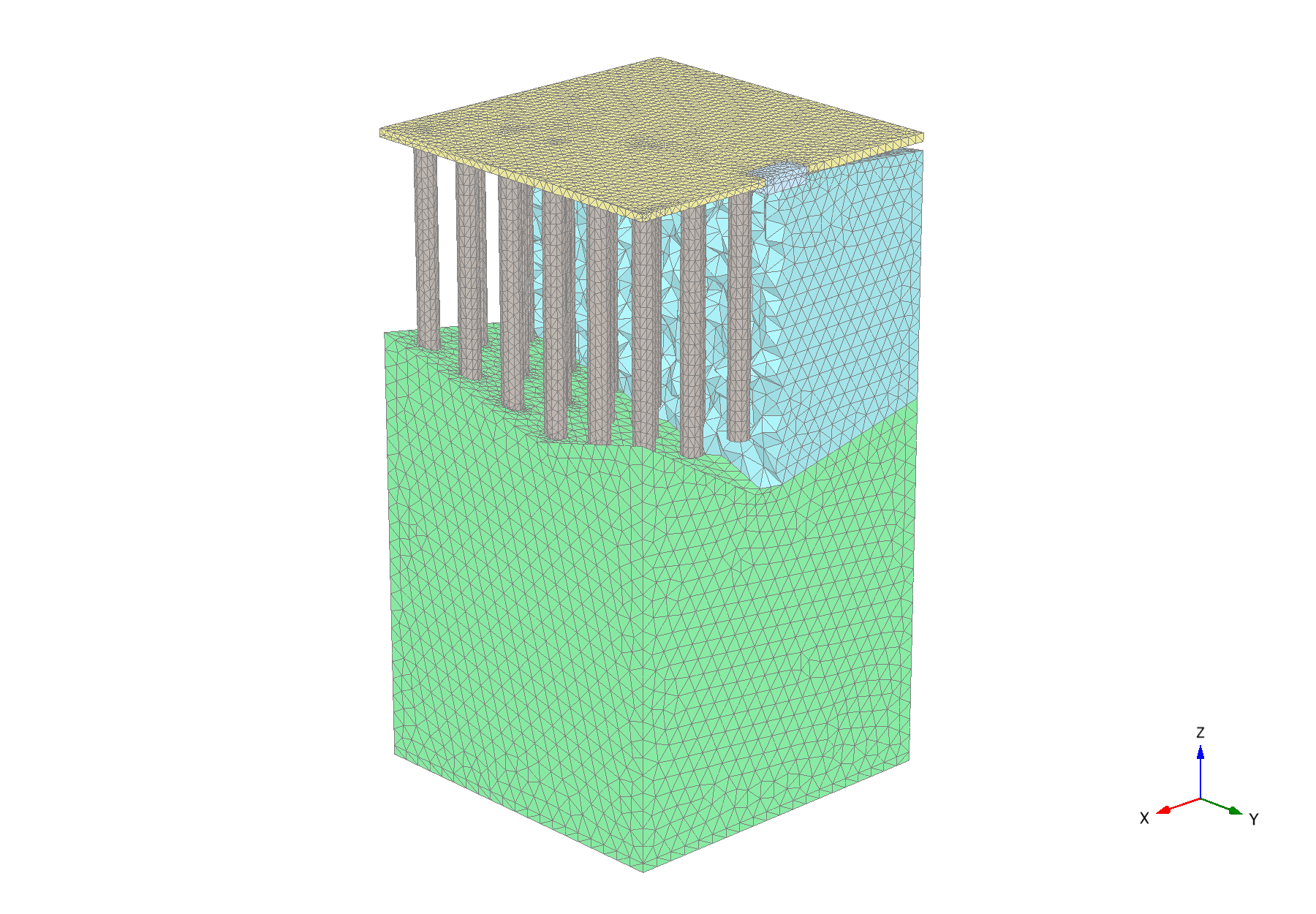
Parametric analyses allow engineers to compare pad foundations on natural ground, shallow foundations on improved ground and piled foundations. The results help determine pad sizes, pile lengths and numbers, and the extent of treatments such as rigid inclusions or granular columns.
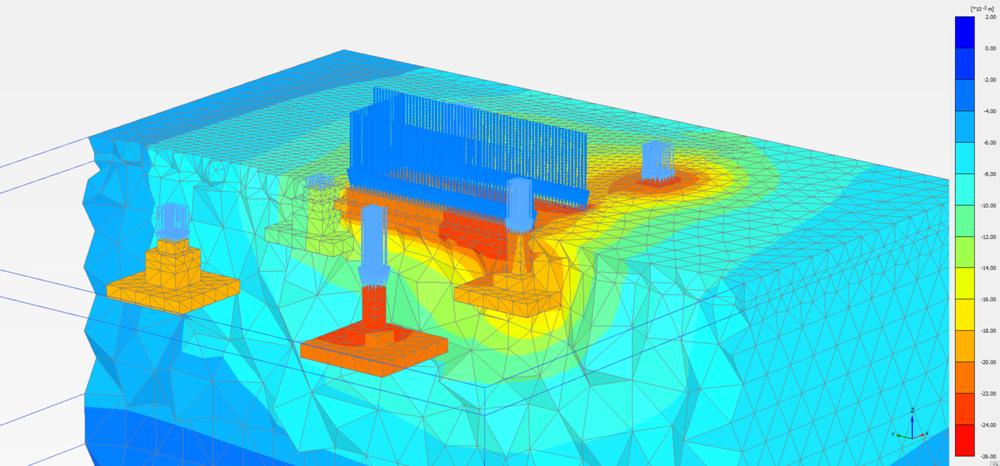
WeSI Geotecnica uses these comparisons to identify where treatment is needed and where a simpler solution already meets the design requirements. Over such large footprints, even modest changes repeated across many foundation elements can have a substantial impact on construction costs.

