Quay structures provide safe berths for vessels and support passenger and cargo operations.
Construction methods range from massive gravity walls to sheet pile walls supported by retaining systems, which can facilitate construction of the reinforced concrete quay.
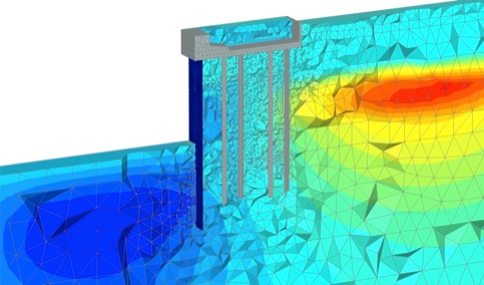 Quays can be geotechnically complex because seabed deposits are often compressible and the deck must sit sufficiently above mean sea level. Vessels apply horizontal loads through mooring bollards and fenders. Commercial quays also carry substantial operational loads from crane rails and container storage.
Preliminary sizing typically starts with an ultimate limit state check.
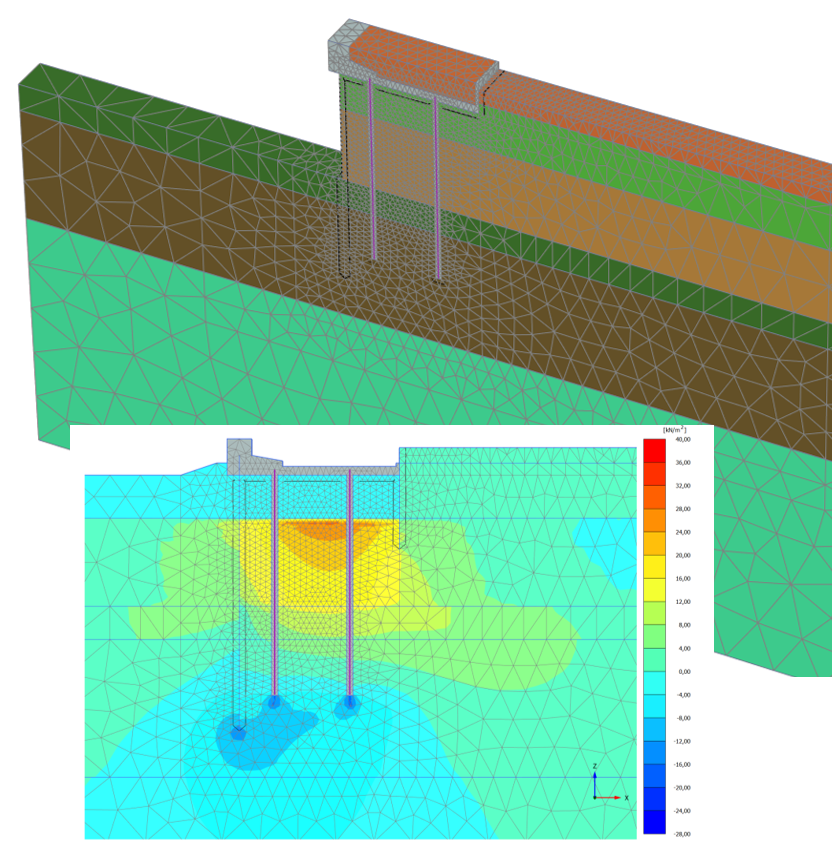
In modern systems, sheet piles, piles, struts and anchors work together. The design must establish how vertical and horizontal loads are shared and verify that movements are compatible with quay operations and the serviceability of adjacent structures.
Finite element modelling can quantify load sharing between components and estimate short- and long-term movements.
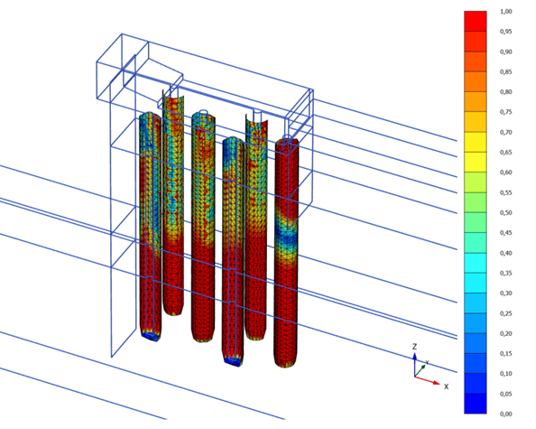
It can also show how much load each component carries and how its available resistance is mobilised at each construction stage.
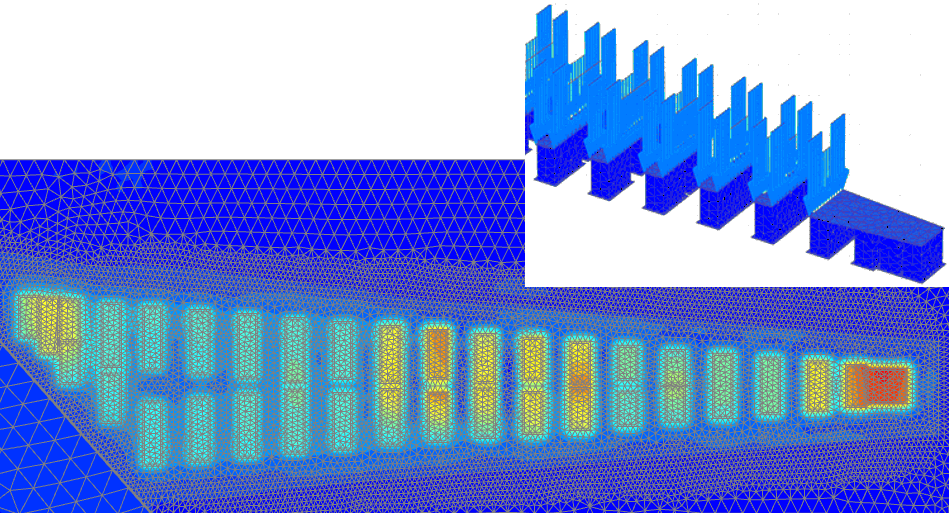
The analysis allows designers to compare alternatives and refine the design. Quays can extend over long distances, so the choice of structural arrangement can materially affect the overall cost.

WeSI Geotecnica Srl
Since 2009
Piazza de Gasperi, 15/11
54100 Massa (MS) - Italy
Tel. +39 0585 44824
Via di Sottoripa 1A/84
16124 Genova (GE) - Italy
email: info@wesigeotecnica.it